
VEVOR 6-Inch Manual Die Cutting Kit
4.1Editor score
Complete starter kit included
Six-inch A5-compatible opening
Portable steel roller construction
Handles paper, felt, and fabric
Discover the best Manual Press Die Cutter options by comparing force, plate size, included dies, portability, materials, and overall versatility.
A manual press die cutter turns concentrated hand-applied force into repeatable cuts, shapes, holes, and embossed textures. A worthwhile machine balances a sturdy frame, smooth operating mechanism, useful working area, and enough pressure for the materials you actually plan to process, from paper and cardstock to leather, foam, fabric, and rubber.
The ten machines in this guide represent distinct approaches, from compact craft platforms to heavy leather presses with steel frames and large working plates. We compared the stated pressing force, stroke, plate dimensions, construction, included accessories, material compatibility, setup requirements, portability, and practical feature sets without claiming to have tested any model personally.
Each review explains who the machine is likely to suit, where it stands out, and where its compromises may matter. The first three recommendations cover a budget option, an all-around choice, and a premium workshop machine, while the remaining entries provide useful alternatives for card making, leatherwork, and specialized production tasks. Product availability and prices can change, so confirm current details before buying.
4.1Editor score

4.7Editor score

5.0Editor score
This side-by-side comparison highlights the major differences in force, working area, portability, construction, and intended use so buyers can quickly narrow the field to a manual press suited to their craft or workshop.


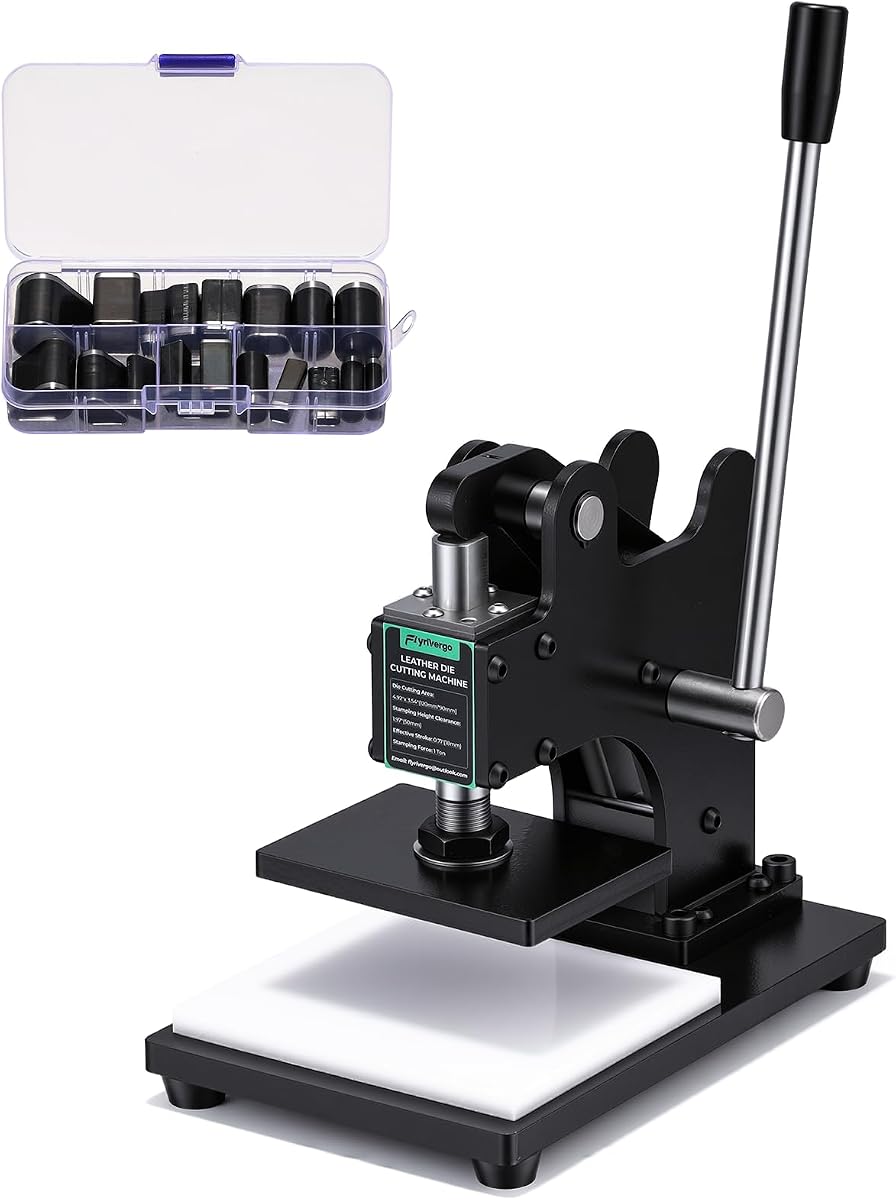


This manganese-steel manual press die cutter has a 4.1 rating and stands out for a stated 1.5-ton capacity, dual guide shafts, and a compact 6.8-kilogram format. Those characteristics make it a practical middle ground for leathercrafters who need more authority than a lightweight paper machine without moving to a large floor-style press.
We may earn a commission when you buy through this link, at no additional cost to you.
The 5.9 x 3.9-inch embossing plate gives users a defined area for repetitive shapes, while the 0.47-inch pressure stroke is intended to accommodate leather, fabric, PVC or EVA foam, plastic, rubber sheets, and other medium-soft materials. An anti-oxidation coating, high-strength roller bearings, and a reinforced base are intended to support stable, smooth operation.
Its limitations are most noticeable when comparing working area with larger leather presses or when comparing included accessories with models that bundle an 18-piece die collection. The plate is sufficient for many small components, but it will not accommodate oversized panels without repositioning. The 4.1 rating also suggests that prospective buyers should examine current customer feedback for details not included in the product listing.
This is a sensible pick for hobbyists and small workshops that routinely cut small leather pieces, textile shapes, and foam components. Its strength, portability, and broad material range are more valuable than maximum plate size, while the lack of listed dies means buyers should plan to source appropriate tooling separately.
At a listed net weight of 6.8 kilograms, the press is substantial enough to resist movement yet light enough to transport between hobby rooms, market stalls, or small workshop spaces. The reinforced base and dual shafts should help reduce twisting during a forceful pull.
The material list makes this press more versatile than a dedicated scrapbooking cutter. It is best matched to thinner leather, fabric, foam, plastic, and rubber work rather than unusually thick or rigid stock, and dies must remain compatible with the stated plate area.
We may earn a commission when you buy through this link, at no additional cost to you.
This VEVOR leather cutting machine combines a 3,300-pound pressing force with a large 14.17 x 10.24-inch working area. Its 4.7 rating is the highest among the ten products, and the combination of extended handle, limit screws, and thick steel body makes it our most balanced recommendation for mixed leather and craft production.
We may earn a commission when you buy through this link, at no additional cost to you.
The machine performs punching and embossing in one platform. A 0.47-inch stroke and adjustable operation are intended to accommodate different material thicknesses, while the anti-slip base and thick steel construction address the stability problems that can cause crooked cuts. The extended labor-saving handle should improve leverage, although users with limited arm strength should still consider whether one-hand movement remains comfortable.
The trade-off is size and weight. Compared with six-inch cardmaking platforms and a 6.8-kilogram leather press, this model offers substantially more room but takes up more bench space. It also lists no included die collection, so first-time buyers should compare tooling needs separately. The stated low-noise operation and rust-resistant finish are useful workshop attributes.
Choose this model for small leather-goods businesses, craft clubs, market booths, and serious hobbyists who alternate between cutting and embossing larger pieces. It is especially attractive when the working area matters more than compact storage. For users who cut only small cardstock shapes, its capabilities would exceed what the project requires.
The 14.17 x 10.24-inch plate is the decisive feature for larger components. It reduces the need to split a single pattern into multiple placements, which can improve alignment and save setup time when repeating panels, pockets, straps, or decorative shapes.
Limit screws are described as helping reduce handle rebound, while the thick body and anti-slip base contribute to a stable platform. These details are important because a wandering work surface can turn an otherwise accurate die into a misaligned cut.
We may earn a commission when you buy through this link, at no additional cost to you.
This 4.3-rated VEVOR press offers a useful midpoint between compact leather tools and the largest machine in the guide. It has a 3,306-pound capacity, an 11 x 5.5-inch embossing plate, and a 0.47-inch stroke, creating a versatile platform for leather, fabric, plastic, rubber, and foam.
We may earn a commission when you buy through this link, at no additional cost to you.
High-strength roller bearings and a manganese-steel base plate support the stated load capacity. Limit screws are designed to secure the handle and limit rebound, while the heavy base helps prevent movement. A black oxide coating is intended to resist rust and corrosion, making the construction suitable for workshops where moisture or frequent handling may be concerns.
It does not include an expanded plate like the top-ranked VEVOR model, so buyers needing broad sheets may find themselves making multiple passes. As with most industrial-style leather presses in this guide, dies are not identified as part of the package. The 4.3 rating indicates generally favorable reception, but the absence of personal testing means that build quality claims should still be evaluated against current owner feedback.
This machine is a good choice for a dedicated leathercraft hobbyist who wants substantial force and a more generous plate than the smallest presses, without choosing the largest and heaviest model. It is particularly relevant for medium-sized patterns and repeatable production work in a compact workshop.
The 11-inch length offers room for elongated patterns such as straps, tabs, and trim, while the narrower width supports placement in a home workshop. It gives makers more freedom than a small desktop punch without requiring the footprint of the largest press.
The manganese-steel base, roller bearings, and black oxide finish are intended to maintain performance under repeated loading. Regular cleaning and dry storage remain important, because coatings reduce corrosion but do not make the machine immune to moisture or residue.
We may earn a commission when you buy through this link, at no additional cost to you.
This blue 6-inch manual die cutting kit is designed for scrapbooking, cardmaking, and paper crafts, and it carries a 4.3 rating. Its familiar six-inch opening accommodates A5-sized material and many standard dies or embossing folders, making it approachable for beginners moving beyond simple handheld punches.
We may earn a commission when you buy through this link, at no additional cost to you.
The internal construction is made from carbon steel, while the stated plate system provides a clear method for both embossing and cutting. The embossing arrangement uses a 13-millimeter plate, two 3-millimeter PC plates, and an embossing folder, while the cutting arrangement adds a 5-millimeter plate. This repeatable stacking method helps users reproduce results more consistently.
Its principal limitation is the narrow working width. A 12.2 by 12.2 by 6.7-inch body may occupy substantial table area despite the portable format, and A5 projects cannot be fed through as a single wide sheet. It is intended for paper crafts rather than the thick, resilient materials handled by the leather presses, so buyers should not choose it as a general-purpose heavy-duty cutter.
This kit is a practical choice for new scrapbookers, students, and hobbyists who want a manual machine and already own or intend to buy standard dies and folders. Its accessible operation and straightforward plate combinations make it less intimidating than an industrial lever press.
The six-inch opening works with most standard craft dies and embossing folders, allowing users to build a collection around one machine. This is more economical and versatile than a dedicated single-purpose punch, provided the material remains within the paper-craft range.
Clear plate combinations reduce trial and error. Users should measure material thickness, follow the stated cutting or embossing stack, and avoid adding layers without checking that the sandwich will pass through the rollers smoothly.
We may earn a commission when you buy through this link, at no additional cost to you.
This compact 5 x 3.5-inch leather die cutter has a 5.0 rating, the highest rating in the guide. It combines a one-ton load capacity, a stated 18-piece metal die set, and a small footprint, making it an attractive option for makers who want to begin leather cutting without buying a collection of dies separately.
We may earn a commission when you buy through this link, at no additional cost to you.
The machine is described as desk-friendly and easy to set up because only the handle needs to be screwed into place. Steel and cast-iron construction with a black oxide coating is intended to resist deformation and corrosion. An adjustable pressure stroke of 18 millimeters provides some flexibility across fabric, paper, plastic, film, foam, and leather, while the dies arrive in a carrying case.
The very small plate is the chief compromise. It is suitable for compact details but not large panels, and the material limits are specific: soft chrome-tanned leather is listed up to 1 millimeter, while stiff vegetable-tanned leather is limited to 0.5 millimeter. The included dies also need to match the size and style supported by this platform. Buyers should verify the final set against their planned projects.
This model is best for beginners, students, dorm-room makers, or leatherworkers focused on small repeated parts. It is our best budget recommendation because the bundled die set removes much of the initial tooling expense, while the compact body and simple setup make it approachable for individual projects.
Eighteen metal dies and a carrying case give new users a usable assortment for holes, patterns, and small custom shapes. They reduce the need for immediate accessory purchases, though specialized die styles may still require separate sourcing.
The 5 by 3.5-inch platform fits cramped work areas and is easy to carry. It rewards makers who make small leather components, tags, patches, and accessories rather than wide panels or production-sized sets.
We may earn a commission when you buy through this link, at no additional cost to you.
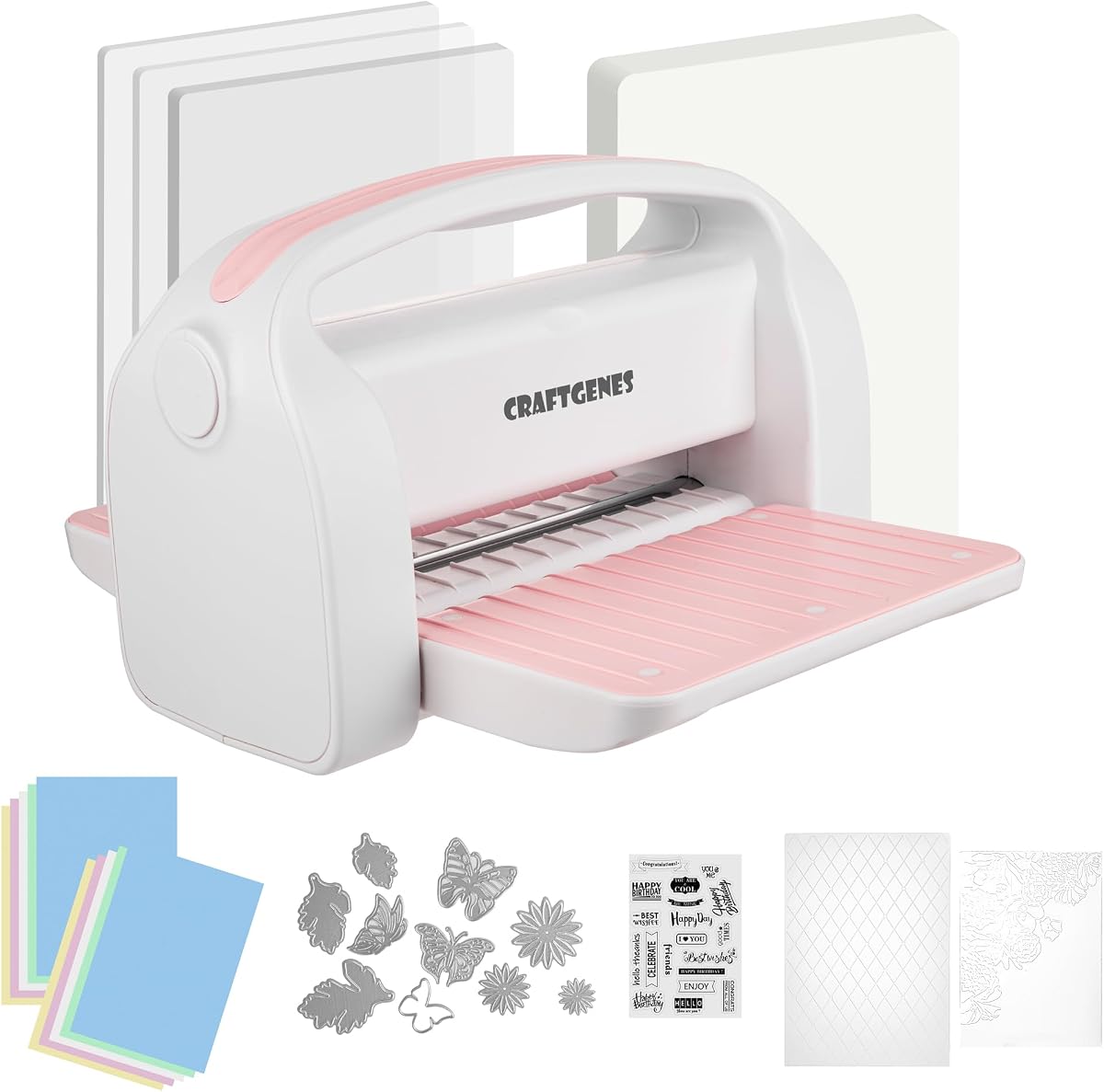
The CraftGenes 9-inch pink machine combines a wider opening with foldable side panels, giving paper crafters more room than a six-inch A5 platform while reducing storage space when it is not in use. Its 4.3 rating and A4 compatibility make it appealing for cards, journals, and seasonal paper projects.
We may earn a commission when you buy through this link, at no additional cost to you.
The ABS construction is described as durable and resistant to ordinary wear, while the manual hand crank supplies consistent pressure without electricity. Detailed plate-stack directions are provided for both embossing and cutting. A 13-millimeter base plate, 3-millimeter cutting plate, embossing folder, and additional plates are used in the listed arrangements, helping beginners establish repeatable results.
This platform is not a substitute for a steel leather press. Its construction and narrower capacity are oriented toward paper and thin craft materials, and the specific layering instructions must be followed to avoid crushed plates or incomplete cuts. The foldable panels also need to be fully supported during use; folding them away while operating would not be appropriate.
Choose this machine for a home craft room where power is inconvenient, storage is limited, and A4 paper is the primary material. It gives users a practical manual workflow for cardmaking, scrapbooking, and journal decoration without the footprint of a heavy workshop machine.
The nine-inch opening supports A4 work, offering a meaningful step up from six-inch A5 platforms. Foldable side panels make it more practical to store between sessions, especially in shared rooms or seasonal craft corners.
Because no motor is involved, the machine avoids electrical requirements and gives users direct control over speed. A smooth, even crank motion generally supports cleaner impressions than a rushed pass, so technique remains important.
We may earn a commission when you buy through this link, at no additional cost to you.
This square 7.87-inch manual leather die cutter combines a stated 0.8-to-1.0-ton load range with an 18-piece metal die set. Its 4.1 rating places it behind several higher-rated alternatives, but the balanced platform, simple setup, and bundled tooling make it a credible choice for independent leatherworkers.
We may earn a commission when you buy through this link, at no additional cost to you.
The machine uses steel and cast iron with a black oxide anti-rust treatment. Its stroke is adjustable by approximately 3 millimeters around the stated 0.47-inch value, which is intended to help accommodate different material thicknesses. Listed applications include leather, fabric, cloth, stickers, plastic, rubber sheet, film, paper, PVC or EVA foam, and non-sticky materials.
Compared with the smaller 5 x 3.5-inch model, it offers a larger square area and slightly lower maximum load, but it may still feel bulky for a desk dedicated to paper crafts. The included dies save setup time, although the listing does not provide a detailed inventory of every die. As with any manual press, results depend on keeping the machine stable and using a die that suits the material and plate size.
This press suits leather hobbyists who want a reasonably sized square work area, a broad set of materials, and minimal initial assembly. It is also a logical alternative for makers who find the larger VEVOR presses excessive but need more capacity than the most compact option.
A 7.87-by-7.87-inch area is useful for both compact parts and moderately sized shapes. Unlike a long narrow plate, the square format gives more freedom when positioning dies at different angles.
Attaching the handle by screw is the only stated installation step, reducing the barriers to entry. The included case keeps the metal dies organized and helps prevent loss or damage between projects.
We may earn a commission when you buy through this link, at no additional cost to you.
This CraftGenes six-inch machine is packaged as a complete cardmaking kit and has a 4.2 rating. It includes plates, magnetic sheets, a plastic sheet, embossing folders, dies, colorful cardstock, badges, and instructions, offering a low-friction introduction to manual die cutting.
We may earn a commission when you buy through this link, at no additional cost to you.
The sandwich system accepts up to 22 millimeters of total material thickness and is stated to produce clean cuts and embossing on paper up to 240gsm. A base plate, B plates, and a C plate can be layered with paper, folders, dies, and optional magnetic or plastic sheets. The instructions also warn that a die's sharp edge should not contact magnetic plates directly.
The material restriction is strict: the machine is designed for cardstock and should not be used with adhesive-backed or laminated materials. It is therefore less versatile than the all-purpose leather presses in this guide. Clear cutting plates may develop light surface marks, and a hard-turning handle can indicate an over-thick or misaligned sandwich rather than a reason to force the machine.
This kit is ideal for beginners making cards, invitations, gift tags, and scrapbook elements, especially those who want accessories immediately. It is less appropriate for a maker already equipped with a full die collection or for users who want to cut leather and other heavy materials.
The included dies, folders, cardstock, and badge set allow users to complete a project without assembling a separate shopping list. That makes the package especially useful for gifts, workshops, and introductory classes.
The recommended maximum sandwich thickness is about 22 millimeters. Rotating or flipping marked cutting plates, realigning components, and disassembling a difficult pass rather than forcing the crank can extend machine life and protect dies.
We may earn a commission when you buy through this link, at no additional cost to you.
The WUTA manual die cutter is our best premium selection. It has a 5.0 rating, a large 38 x 31.5-centimeter body, and a construction focused on sustained force, rigidity, and precise guidance for leather and mixed-material workshops.
We may earn a commission when you buy through this link, at no additional cost to you.
Its double guide-shaft system uses chrome-plated components, guide wheels, and long compression rods to support pressure and reduce misalignment. The frame is made from black-anodized stainless steel, and an advanced needle bearing is stated to accommodate one-ton or 1.5-ton loads. The applicable pressure area is listed as 260 by 160 millimeters, or 10.23 by 6.29 inches.
This is not a portable craft press. Its packaged weight is approximately 38.5 kilograms, which is far more than the lighter leather models and paper platforms in the guide. That mass contributes to workshop stability, but it also means the buyer needs a suitable floor or reinforced bench and should consider delivery logistics. The included high-density PVC board and cutting mold are useful starting accessories.
The premium recommendation is justified for professional leatherworkers, small manufacturers, and dedicated studios producing larger quantities of leather, fabric, rubber, foam, film, or paper components. For occasional small-card projects, its power and footprint would be unnecessary. During operation, the die's knife edge should face upward as specified by the manufacturer.
The paired guide shafts, wheels, and long compression rods are intended to keep the moving assembly aligned under substantial loads. This is a meaningful advantage for repeated leather cutting, where uneven tracking can waste material or damage tooling.
The approximately 38.5-kilogram weight is substantial, but that mass helps resist shifting during forceful operation. Users should place the machine on a level surface with adequate load capacity and maintain clear space around the handle and working area.
We may earn a commission when you buy through this link, at no additional cost to you.
This VEVOR six-inch machine is a portable manual cutting and embossing platform with a full starter kit. Its 4.1 rating reflects a straightforward, accessible option for scrapbooking, cardmaking, and small paper crafts rather than heavy leather production.
We may earn a commission when you buy through this link, at no additional cost to you.
The package includes cutting pads, an A6 embossed folder, a cutting die, and A5 cardstocks. A metal handle and steel roller system are designed to provide dependable pressure and embossing performance, while the machine accepts common six-inch embossing folders, texture plates, and rule dies. The stated material range includes paper, felt, leather, fabric, and metal.
The six-inch opening is narrower than the CraftGenes nine-inch model and the larger leather presses. The broad material list should also be interpreted in the context of a compact craft machine: very thick leather or metal may place excessive demands on the rollers, and users should follow the manufacturer's material guidance. The supplied starter items are useful, but established crafters may outgrow them.
This is a convenient choice for beginners, travelers, and home crafters who want an all-in-one portable platform. It also works for small mixed-media projects involving paper, felt, and light fabric. It is not the strongest option for repeated industrial cutting, but it offers a practical way to begin using dies and embossing folders.
The compact body and manual operation make the machine easy to carry to a craft class, market booth, or shared workspace. Because it requires no power connection, setup is limited to positioning the machine and building the correct plate sandwich.
Support for standard six-inch embossing folders, texture plates, and rule dies allows users to add to their collection gradually. The included A6 folder, die, pads, and cardstock provide enough material to test the workflow immediately.
We may earn a commission when you buy through this link, at no additional cost to you.
Choosing a manual press die cutter starts with the materials and size of the pieces you plan to make. Force, working area, plate system, included dies, portability, and build quality should then be matched to your most common projects rather than to the largest available specification.
Choose enough force and stroke for your thickest routine material, not merely your most ambitious project. Very thin materials do not require a high-capacity press, while the compact paper platforms are not substitutes for heavy leather tooling.
Match the plate to the scale of your finished parts. Wide panels favor large-area presses, while small tags, straps, and card embellishments fit compact platforms.
Choose a plate-stack craft machine for paper designs and a lever press for leather or industrial materials. Verify the manufacturer’s material list before assuming either type is universal.
Prioritize a rigid frame, smooth guides, and a stable base for repeated work. Choose lightweight construction when portability and easy storage matter more than heavy-material capability.
Check the actual accessory inventory against your project plans. Included dies save setup time, but specialized or replacement tooling may still need to be purchased.
Review stated thickness limits, die dimensions, and material restrictions together. Test an offcut first and confirm that the die matches the press.
Measure storage and workbench space before choosing. Favor a compact platform for classes and travel, or a heavy stationary press for a dedicated workshop.
Favor simple assembly, clearly labeled plate systems, and a comfortable handle. Follow the specified stack order every time.
Begin by placing the machine on a level, stable surface and checking that the base, guide shafts, rollers, and handle are secure. Confirm that the die or embossing folder fits the working area, then prepare the material on a clean cutting surface. Read the manufacturer’s plate-stack diagram for your machine, because the order of base, cutting, and embossing plates directly affects whether the die reaches the material cleanly.
For a paper craft machine, build the complete sandwich on the base plate with the cutting die facing the correct direction. Position the paper inside the folder or against the die, add the required top plates, and feed the sandwich through slowly. For a lever leather press, center the material and die on the platen, confirm the knife edge orientation, and lower the handle in a controlled motion. Avoid twisting the handle, and never force a material that has not been fully cut; stop and investigate alignment, thickness, or die compatibility.
After each session, remove loose scraps and adhesive residue, then wipe the rollers, plates, and cutting surfaces with a dry or slightly damp cloth appropriate to the manufacturer’s guidance. Keep the tool dry, protect steel components from moisture, and store accessories in their case or labeled organizer. Periodically inspect the handle fasteners, guide shafts, springs, and plate edges. Replace cracked plates or damaged dies rather than risking a poor cut, and do not lubricate the mechanism unless the manufacturer specifically authorizes a product and method.
It depends on the machine’s stated force, stroke, die, and material limits. A one-ton compact press lists limits of 1 millimeter for soft chrome-tanned leather and 0.5 millimeter for stiff vegetable-tanned leather, while heavier models may support more. Always follow the specific thickness guidance and begin with an offcut to confirm that the die, material, and press work together correctly.
Manual machines offer direct control, require no electricity, and often cost less while remaining portable. Electric machines can provide greater convenience and consistency for frequent high-volume work. The right choice depends on material, desired force, production volume, and whether the operator prefers or is comfortable with manual pressure.
Die cutting removes material to create a shape or pattern, while embossing creates a raised or recessed impression without necessarily removing the material. Many machines can perform both, but they require different dies, folders, and plate arrangements. Follow the stated cutting or embossing sandwich for the selected machine.
Not every die is universal. Compatibility depends on the machine’s plate size, operating system, die dimensions, and intended material. Craft machines may accept common standard dies within their opening, while leather presses often need dies sized to the platen and shaped to work with the press mechanism. Measure before ordering and check the manufacturer’s compatibility information.
A hard-turning handle can result from an over-thick plate sandwich, a misaligned component, debris, a damaged plate, or a die contacting a part of the machine it should not touch. Do not force it. Stop, open the sandwich, inspect each layer, confirm the total thickness, and realign or clean the components before trying again.
The included dies are generally intended to help users begin working with the machine, but suitability depends on their design and the material. Metal dies may handle leather, while paper-craft dies can be too delicate for it. Confirm the die material, edge, dimensions, and manufacturer guidance before using bundled tooling on leather or other tough materials.
Store the machine in a dry, clean location away from direct moisture and excessive dust. Keep cutting plates dry, avoid stacking heavy objects on the rollers or platen, and protect dies from impacts. Fold or remove side panels only when the machine is fully stopped, and use the included case for loose dies when one is provided.
Some compact machines list paper, felt, fabric, and light leather, but the depth of suitable material varies. High-capacity lever presses are better suited to leather and other heavy stock, while A5 and A6 platforms are optimized for cardstock and craft media. Choose the machine around your primary material rather than assuming every listed material can be cut equally well.
The best overall choice is the VEVOR 14.17 x 10.24-inch die cutter because it combines the guide’s highest rating with a large working area, substantial force, and a dual-purpose punching and embossing design. The VEVOR six-inch full kit is the most convenient budget starter for paper crafts, while the WUTA 38 x 31.5-centimeter machine is the strongest premium selection for a dedicated leather or production workshop.
Before buying, prioritize the material you will use most often, the largest finished piece, the required working area, and the included die compatibility. A large force rating cannot compensate for a plate that is too small, and a generous accessory package is not useful if its dies do not match your designs. A stable frame and clear setup instructions are especially important for repeatable results.
Ratings, bundles, availability, and prices can change over time, so review the current listing and recent customer feedback before placing an order. Confirm the machine dimensions, material limits, die inventory, included plate arrangements, and warranty terms. Most importantly, choose the platform that matches your craft rather than one that merely has the largest stated specification.